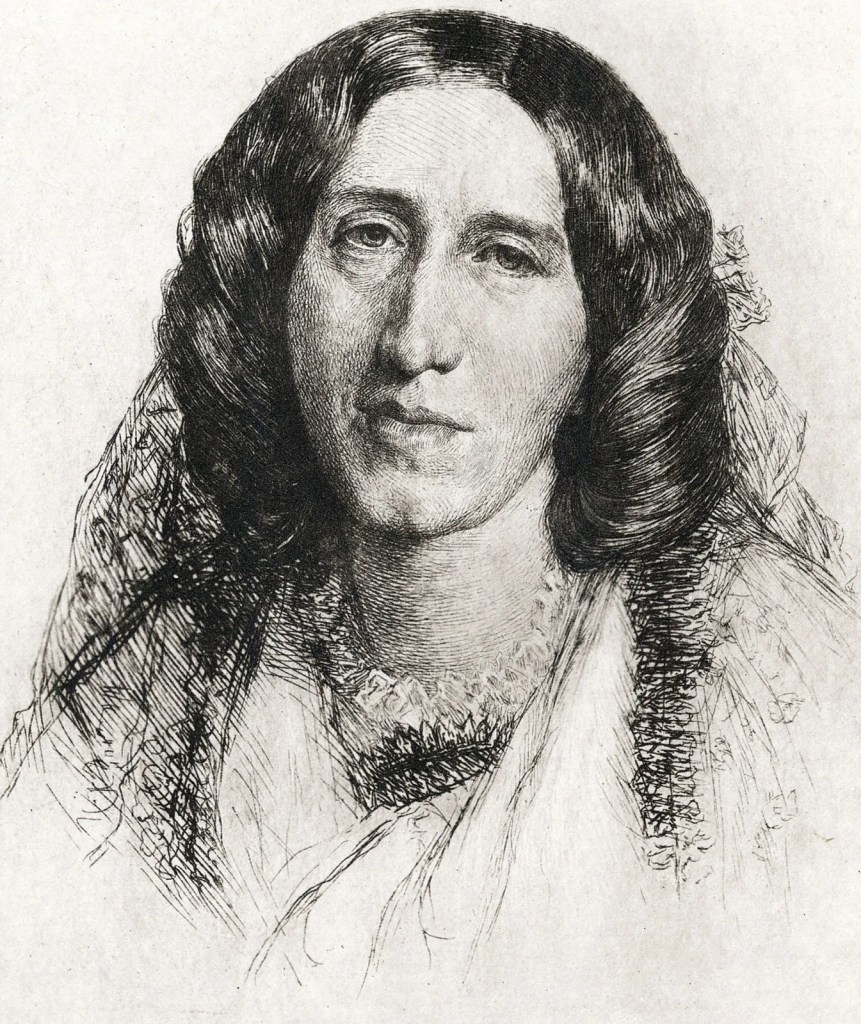
George Eliot’s fifth novel, Middlemarch, was published serially in eight by-monthly installments between 1871-72. The novel totals 86 chapters and remains one of the most revered panoramic novels of the age. At the time of the novel’s release in the Victorian period, Eliot was considered England’s most prominent novelist. To this day, literary critics still consider Middlemarch one of the “greatest novels in English,” and regard George Eliot as “the greatest writer in the English language ever.” The critical esteem for Eliot’s most popular work reflects the enduring importance of this text for our understanding of literary realism and the novel as a genre. In this class, we will take our lead from J. Hillis Miller, who argues that “good reading is slow reading,” making our way through this famously long novel with attention to its aesthetic specificity by close reading the force and quality of language, considering how it develops new structural conventions for narrative, analyzing the ways it expands what is meant by “realism,” and mapping how Eliot uses the novel form to explore questions about sympathy, ethics, politics, and religion through representations of the workings of the human mind as it responds to the social world in which it is always enmeshed. By the end of class, students will have read Middlemarch, analyzed the language of the text closely, developed critical vocabulary about the novel as a form, learned to situate their own arguments in relation to literary critical conversations, and reflected on the value of “slow reading” that aims to deepen understanding through careful attention to language, literature, and its unforgettable aesthetic effects.
Required Texts
Eliot, George. Middlemarch..Ed. Ronjaunee Chatterjee. Norton Critical Editions, 2024.
Please note that you must purchase the edition linked above. We will be using the editorial material, which is specific to this text. Failure to acquire the correct edition will mean you miss course material.
Blank notebook or journal.
Assignments
Commonplace Book (20%)
Throughout the course, each of you will design and compose a commonplace book that reflects your reading and thinking about Middlemarch. A commonplace book is both akin to and distinct from a notebook, scrapbook, annotated bibliography, journal, miscellany, and Wunderkammer. In our case, it’ll be a compendium of quotations from the novel, classroom handouts, scholarship, historical contexts, your own commentary and analysis, photographs, drawings, and other materials that relate to or help you to understand, relate to, and reflect on Middlemarch. You can find more details about this assignment on the Assignments page.
Crux Buster – Close Reading (15%)
This close reading assignment asks you to take a piece of text– a passage of no fewer than ten sentences– and analyze it. Your close reading should clearly state your interpretation of the passage, noting how it is narrated, what language it uses, how the language informs the ways we interpret it, and what meanings this arrangement of language necessarily implies. Close reading is slow reading but it is also attentive reading that discovers how a text means and the varieties of meanings that we might derive from it beneath surface-level summary or interpretation.
Crux Buster – Criticism (15%)
This close reading assignment asks you to take a piece of text– a passage of no fewer than ten sentences– and analyze it. Your close reading should clearly state your interpretation of the passage, noting how it is narrated, what language it uses, how the language informs the ways we interpret it, and what meanings this arrangement of language necessarily implies. Close reading is slow reading but it is also attentive reading that discovers how a text means and the varieties of meanings that we might derive from it beneath surface-level summary or interpretation.
Final Paper Proposals, Preliminary Bibliography, and Discussion (15%)
For the final, you will have to write a proposal. You will not be graded on the written content of the proposal, but on your discussion with me in person of it. While the proposal itself is not the most complex genre, I am looking for the following qualities in our discussion:
- a focused research topic that helps to explore Middlemarch and the affordances of the novel as a genre
- detailed plan for interpreting specific passages of text or moments in the novel that give you insight into this topic
- ability to explain why this project is important to you and your interests in literary studies
- a preliminary bibliography of 3-5 sources with annotations
You must meet with a research librarian to complete the assignment and me to discuss your findings. The librarian will help you find sources, and the discussion with me will assess your knowledge and understanding of the sources you have selected. The grade will be assigned not on the written work but on the quality of our discussion about the sources you have found.
Draft Meeting and Defense (5%)
The last week two weeks of class will be dedicated to draft meetings. Each student will meet with me one on one to discuss their progress on their final essay. Students should have drafted no fewer than 5 pages for this meeting. The final paper is 10-12 pages. The discussion will require the student to assert their argument, explain their examples, and pose questions about how they have organized or plan to revise it. I am not looking for perfection. In fact, mess is always welcomed. I am looking for meaningful intellectual engagement in the topic.
Final Paper (10%)
The final paper will be assessed as a piece of writing. Any use of AI on this final or any portion is strictly prohibited because it defeats the purpose of the assignment: to learn how to read, write, and use theory in your own words. If I expect AI, I reserve the right to assign you a 0 for the paper, and I will not let you rewrite it.
Preparation, Participation, Attendance (20%)
Your participation in this seminar style class is imperative. Be prepared to participate and attend class every day. If you are not prepared for discussion and participation, I consider this to be a form of absence.
Learning Outcomes
This course fulfills these learning goals for the English Major and Minor. Students will:
- Read slowly, carefully, and closely.
- Attend to the nuances of a long-form novel.
- Situate arguments in a larger critical conversations and historical contexts.
- Relate arguments and ideas to current theoretical concepts.
- Write thoughtful interpretations and arguments about the novel.
- Consider the role of novel reading and realism in the production of Victorian social values as well as the ethical imperatives Eliot ties to art and literature.

